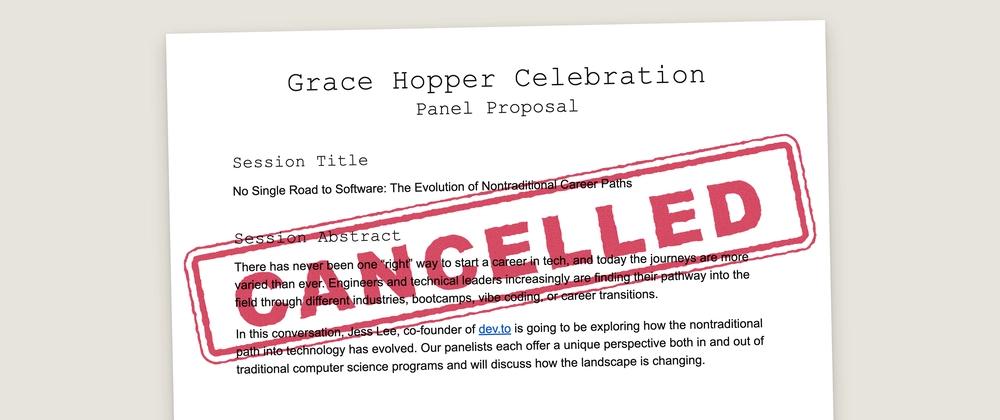
The Grace Hopper Celebration has been around since 1994, and for a lot of people, it's the event for women in tech. It's where students land their first internships, where people find mentors and peers who look like them, and where, for a few days, being a woman in a room full of technologists is the norm instead of the exception.
AnitaB.org has cancelled this year's Celebration, which was supposed to take place in Anaheim later this month. Their statement says registrations and sponsorships came in "significantly below" expectations, and the funds needed to put on the event just weren't there.
I was supposed to attend for the first time this year and host a panel on the evolution of nontraditional career paths into tech. I was really looking forward to that conversation.
A little over two years ago, I wrote about how I felt when Women Who Code shut down, and this news brings up a lot of the same feelings.
The sponsorship gap
Conferences like Grace Hopper run on company support, and that support shows up in two ways. The obvious one is sponsorship: booths, recruiting teams, and the dollars that make an event of this scale possible. The less obvious one is registrations. Between tickets, flights, and hotels, attending GHC adds up fast, and for a big chunk of attendees, it's their employer who has historically covered the cost. So when companies stop paying for their teams to attend, low registrations aren't a sign that people don't want to go. They're the same sponsorship gap, just showing up in a different line item.
When that support dries up on both fronts, even the most established event in the space can't happen.
When Women Who Code shut down, it felt like my fears of stagnancy and going backwards were being confirmed. I wish I could say things have turned around since then. Instead:
- Company budgets for DEIB have continued to shrink, and "diversity" has become a word a lot of companies would rather not say out loud.
- Sponsorship dollars for community events have dried up across the board.
- The people these spaces serve are still tired. Being the only woman in the room hasn't gotten less exhausting just because it's gotten less fashionable to talk about.
Women Who Code and Grace Hopper were two of the biggest, most established institutions in this space. If the tech industry, which is by most measures still incredibly well-resourced, isn't investing in them, then smaller grassroots groups are in an even tougher spot.
What's next
One of my personal goals right now is to speak more, and news like this makes that feel more important than ever. If the big stages are disappearing, those of us who have a platform need to keep using it.
But you don't need a stage to make a difference. Look around at your team, your community, your classmates, and find the people who are undervalued and underrepresented. Mentor them, recommend them, amplify their work, and make sure they're heard in the rooms they're in. That kind of support doesn't need a sponsor.
Thanks for reading <3